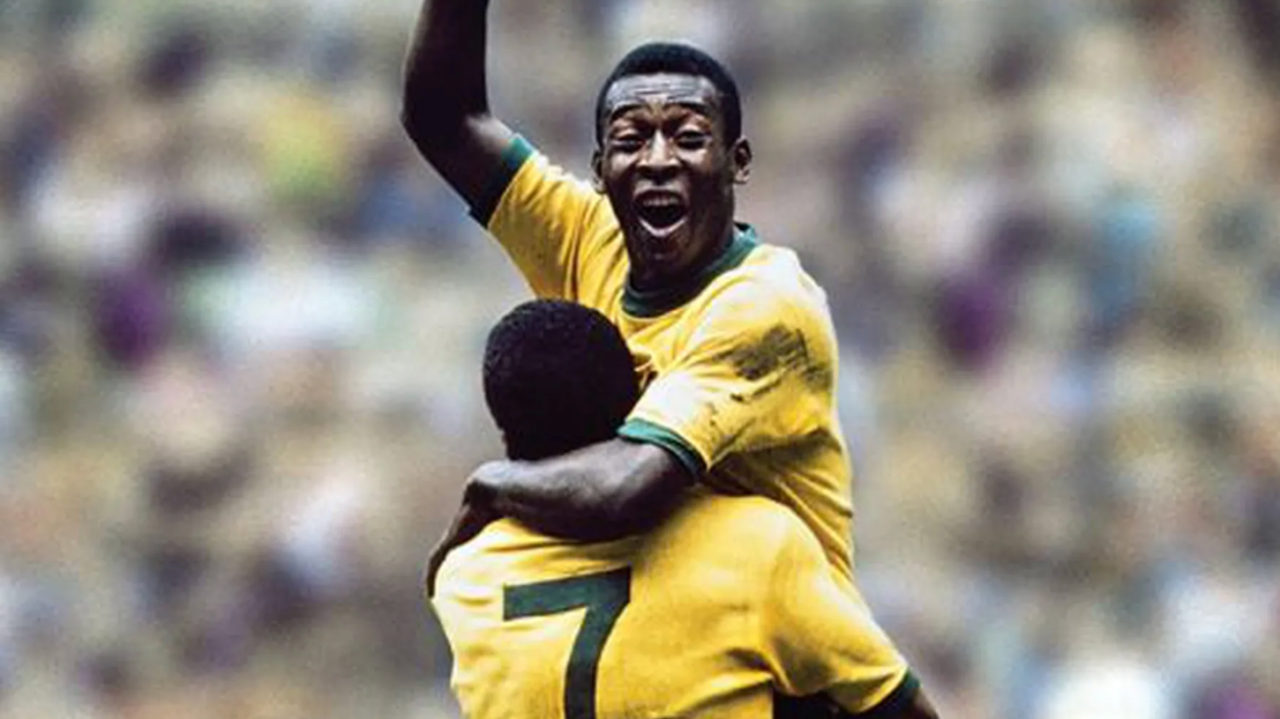
Brazilian soccer, or futebol, is far more than just a sport—it’s a rich cultural phenomenon that reflects the history, identity, and resilience of the nation. Like carnival, futebol serves as a platform for creativity, community, and resistance, with deep roots in the African diaspora. From the players’ iconic movements to the music associated with the game, Brazilian soccer weaves together stories of joy, struggle, and national pride.
The Art of Being Liso
A defining characteristic of Brazilian soccer is its unique, fluid style, often described with the Portuguese term liso—meaning slick or elusive. Neymar Jr., often referred to as Menino Ney (Boy Ney), embodies this elusiveness through his quick and unpredictable movements. The term moleque—rooted in Angola’s Kimbundu language—carries nuances of mischief and rebellion, once used to describe enslaved boys in colonial Brazil. Today, it represents youthful defiance and creativity, values echoed in samba, capoeira, and futebol itself.
Dance as Celebration and Defiance
The 2022 World Cup showcased the expressive power of goal celebrations by Brazilian players like Neymar and Richarlison. Viral videos of their dances captivated social media audiences but drew criticism from some European commentators who deemed these celebrations “disrespectful.” These dances, often set to funk carioca, a music genre born in Rio’s favelas, represent far more than joy—they symbolize resilience and pride. The rhythmic movements recall Gilberto Freyre’s concept of dança dionisíaca (Dionysian dance), embodying cultural resistance to rigid norms.
Global Recognition: Music, Soccer, and Brand Narratives
The global appeal of Brazilian soccer culture is evident in iconic marketing campaigns, such as Nike’s “Joga Bonito” series. One memorable ad features the song “Mas Que Nada” by Jorge Ben Jor—a track that transcended borders when Sérgio Mendes popularized it internationally. This combination of sound and imagery reinforces soccer’s dual role as a symbol of cultural authenticity and a commercialized global product. Beyond selling sports gear, the campaign celebrated the artistic flair of futebol-arte—Brazil’s unique blend of style and sport.
The Yellow Jersey as a Political Symbol
The Brazilian national soccer jersey, known as the amarelinha, has long symbolized national pride. However, its meaning took on a polarizing dimension during the January 8, 2023 protests in Brasília, when far-right demonstrators adopted the jersey as a symbol of their ideology. This event sparked a nationwide debate: could the amarelinha remain a unifying emblem, or had it been co-opted? Many Brazilians responded by reclaiming the jersey as a symbol of unity and resilience, emphasizing futebol‘s historical role in shaping Brazil’s national identity.
Futebol-Arte
In his exploration of Brazil’s cultural fabric, anthropologist Gilberto Freyre celebrated futebol-arte, or art football—a style defined by improvisation, fluidity, and creativity. Freyre described this style as futebol mulato, reflecting Brazil’s racial and cultural diversity. In contrast to the disciplined, collective approach of European soccer (which Freyre associated with the Apollonian), Brazilian soccer embraced the Dionysian: individual expression, rhythm, and spontaneity. These qualities symbolize Brazil’s unique ability to turn survival into art.
However, the 1950 World Cup final loss to Uruguay—known as the Maracanazo—left a lasting scar on the nation’s psyche. Journalist Nelson Rodrigues captured this sense of national self-doubt with the term complexo de vira-latas (stray-dog complex), referring to a collective inferiority complex. This concept continues to resonate, reflecting Brazil’s ongoing struggles with identity and self-worth on the global stage.
Capoeira, Samba, and Malandragem
Brazilian futebol draws from traditional cultural expressions such as samba and capoeira. The deceptive, dance-like movements in capoeira—developed as a form of resistance by enslaved Africans—mirror the agility and trickery seen in soccer. Similarly, malandragem, a term for street-smart cleverness, shapes the unpredictable dribbles and feints that define the game. Historian Marshall Eakin described Brazilian soccer as “samba on the pitch,” underscoring how syncopation—a rhythmic disruption of expectations in samba—parallels the improvisational brilliance of Brazilian players.
The Legacy of Garrincha and Pelé: Symbols of Futebol’s Duality
Garrincha and Pelé, two of Brazil’s greatest soccer icons, embody the duality of futebol-arte. Garrincha, affectionately known as o anjo das pernas tortas (the angel with crooked legs), was beloved for his unorthodox dribbles and free-spirited style. He became a hero of the working class, representing both the joy and the hardships of everyday Brazilians.
In contrast, Pelé—o rei do futebol (the king of soccer)—became a global ambassador for the sport, winning three World Cups (1958, 1962, and 1970), an unmatched achievement. Literary critic José Miguel Wisnik noted that Pelé seemed to operate on a “different frequency,” combining precision with creativity. Despite his fame, Pelé maintained an apolitical public image, unlike contemporaries like Muhammad Ali and Diego Maradona. His ability to balance his public persona with his private life helped cement his enduring legacy as a symbol of both athletic excellence and humility.
The Enduring Symbolism of Jogo Bonito
Brazilian futebol, epitomized by the phrase jogo bonito (the beautiful game), remains a profound cultural expression that transcends the confines of the field. It is both an art form and a battleground for debates on race, class, and identity. Whether through goal celebrations, music, or historical moments, futebol continues to shape Brazil’s national narrative, reflecting its complexities, contradictions, and aspirations.

*This article is adapted from a guest lecture I delivered in the Fall 2024 course Portuguese Sea at NYU. It explores the intricate connections between art, politics, and Brazilian soccer, emphasizing its cultural depth and global significance. For an enhanced experience, you can access the corresponding YouTube playlist with the videos referenced in this article: https://youtu.be/0xzL40e0Jfk?si=a95s5zRz5tixi0mW
 Francisco Quinteiro Pires
Leave a comment