A Classroom in Relation
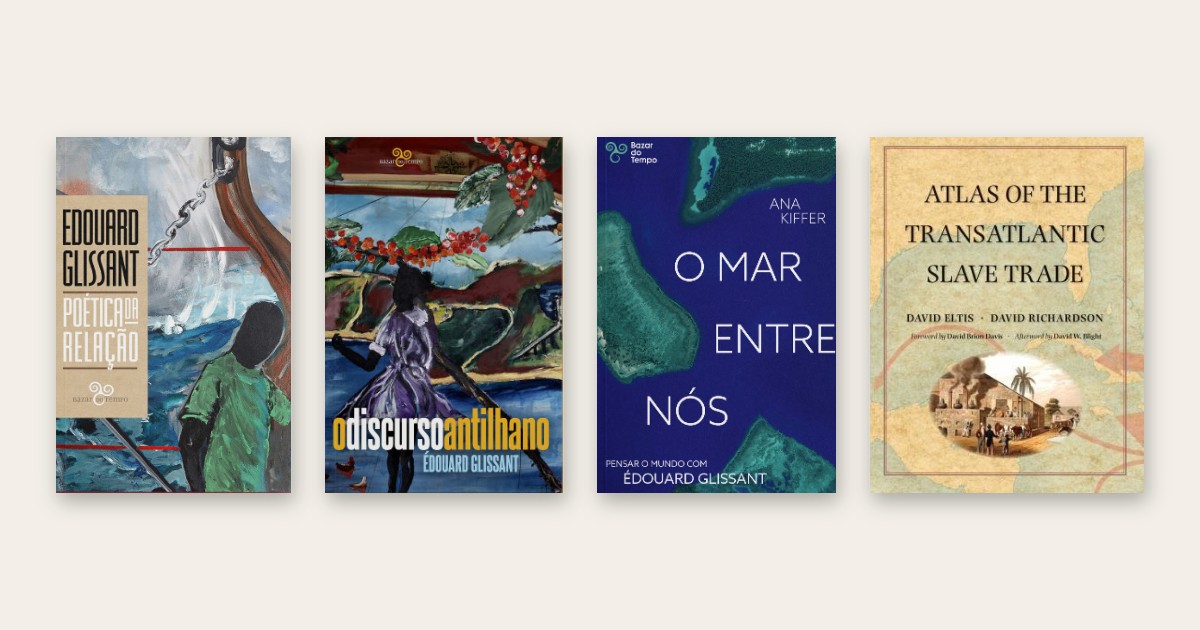
Glissant’s thought, a longstanding influence in Caribbean and Francophone studies, is now gaining prominence in Brazil, where his work has recently been translated into Portuguese. The Coleção Glissant, curated by Ana Kiffer and published by Bazar do Tempo, has introduced Brazilian readers to Poética da relação (2021), translated by Marcela Vieira and Eduardo Jorge de Oliveira, and O discurso antilhano (2025), translated by Thiago Florencio. Kiffer has also contributed her own meditation, O mar entre nós: Pensar o mundo com Édouard Glissant, an essay that explores the Martinican writer’s constellation of ideas and considers what forms of relation remain possible amid forces that seek to divide us.
These publications reached me in New York, where I spent the spring and summer of 2026 teaching LAT 125, Puerto Rican Culture and Folklore, at the Borough of Manhattan Community College (BMCC), CUNY. Although the course was not initially structured around Glissant, his work became central to our discussions. A week that began with explorations of drums, sugar, and the slave trade concluded with a question regarding the meaning of identifying as Antillean. The following account details that week and explains why, as a Brazilian teaching Puerto Rican topics to students in New York, I ultimately engaged deeply with Glissant’s ideas.
The week unfolded in three stages. First, we examined geography, considering the Caribbean as a region shaped by the Atlantic slave trade, with Brazil and Puerto Rico occupying interconnected positions. Second, we addressed ideology, focusing on racial democracy—the concept originating in Brazil that racial mixture eliminated racism, which Puerto Rico adapted in its own context. Third, we explored tradition, analyzing how Caribbean intellectuals have complicated discussions of culture, creolization, and heritage, from Négritude to Glissant’s poetics of Relation.
A Caribbean Shaped by Sugar
I began with a map rather than a date. David Eltis and David Richardson’s Atlas of the Transatlantic Slave Trade (Yale, 2010) reconstructs 350 years of voyages, from 1501 to 1867, involving an estimated 12.5 million captive Africans. Two statistics from the atlas reframed the region for students: approximately 80 percent of captives were transported to sugar-producing areas, and Brazil alone received about 4.8 million individuals, nearly 45 percent of all those carried across the Atlantic. Rio de Janeiro, Bahia, and Pernambuco were among the seven ports responsible for almost three-quarters of the trade.
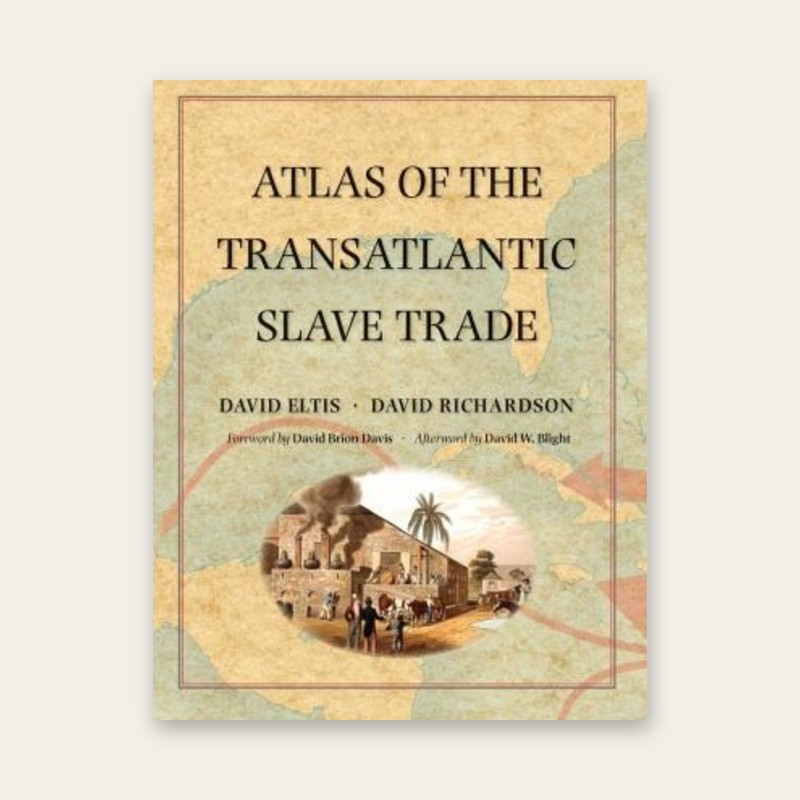
Viewed through this map, the Caribbean emerges not as a collection of islands but as an interconnected system. The cultivation of sugar migrated from the eastern Mediterranean to the Gulf of Guinea, then to Brazil, and subsequently to the Antilles. Northeastern Brazil and the Caribbean formed part of the same plantation complex. Although Puerto Rico participated on a smaller scale than Cuba or Brazil, its most significant importation of enslaved people occurred in the early nineteenth century during the sugar boom and persisted through illicit trade long after Spain and Britain agreed to end the slave trade.
Jorell Meléndez-Badillo’s Puerto Rico: A National History (Princeton, 2024) provided the island’s perspective on this narrative, emphasizing a chronological lesson. Individuals of African descent were present from the onset of colonization in Puerto Rico. By approximately 1530, a census recorded about 327 Spaniards, 1,500 Indigenous people, and over 2,000 Black individuals. What may have been the first revolt of enslaved people in the Americas occurred in Borikén in 1514. As the sugar economy expanded, the enslaved population increased from about 13,000 in 1802 to more than 51,000 in 1846, with the island experiencing at least twenty-five rebellions or conspiracies.
The colonial state responded by regulating bodily practices. In 1826, Governor Miguel de la Torre issued a decree permitting enslaved people to dance to their drums on holidays, but only within the plantation, under the supervision of overseers, separated by sex, and only until sunset. In 1848, Governor Prim y Prats enacted the Bando contra la Raza Negra, subjecting all Black individuals, whether free or enslaved, to military tribunals. Abolition was declared on March 22, 1873, but was accompanied by three additional years of forced labor contracts. At this point, music entered our classroom as evidence: Bomba, the island’s oldest surviving musical genre, preserved through rhythm and gesture memories that the written archive, produced by colonial authorities, failed to document.
Racial Democracy: From Brazil to Puerto Rico
The concept most closely linking Puerto Rico to Brazil is racial democracy: the assertion that a nation founded on racial mixture has thereby transcended racism, rendering any reference to discrimination as an external influence. Brazil is central to this ideology. In 1933, Gilberto Freyre published Casa-grande & senzala, which challenged previous pessimism about mestiçagem and depicted the plantation house and slave quarters as an interconnected world. Earlier, José Vasconcelos had argued in La raza cósmica (1925) that Latin American mixture would produce the humanity of the future. Frank Tannenbaum’s Slave and Citizen (1946) further advanced the thesis that Iberian slavery was milder than its Anglo-Protestant counterpart.
For students in New York, accustomed to the discourse of race in the United States, the concept was unfamiliar. Both Brazil and Puerto Rico constructed national narratives that contrasted their racial mixture with U.S. segregation. Brazil also subjected this thesis to empirical scrutiny. In the 1950s, UNESCO commissioned studies with the expectation of documenting a racial paradise. However, Florestan Fernandes identified pervasive inequality and characterized Brazilian society as exhibiting the prejudice of having no prejudice. Abdias do Nascimento further argued that the ideology of mixture functioned as a gradual form of erasure. As I explained to my students, drawing on my perspective as a Brazilian, the myth did not disappear in response to these critiques; rather, it adapted.
In Puerto Rico, racial democracy assumed tangible form. Paulina Alberto and Jesse Hoffnung-Garskof demonstrate that the island occupied an early and distinctive position in the inter-American debate on racial democracy, partly because Puerto Ricans navigating between the island and the United States experienced two systems of racial meaning simultaneously. Rafael Capó García has analyzed how the triad of Spanish, Taíno, and African roots was commemorated in monuments throughout the archipelago. The most illustrative example is the emblem of the Instituto de Cultura Puertorriqueña, established in 1955. The initial emblem from 1956 depicted only the Spaniard and the Taíno. In Lorenzo Homar’s 1957 version, the African figure appears, holding a machete and a drum, while the Spaniard holds Nebrija’s grammar.
Arlene Dávila characterizes this as an equation of national unity with mixture that simultaneously preserved whitening within national symbols. Isar Godreau and others have described the folklorization of Blackness, wherein Black Puerto Ricans are celebrated as a historical root rather than fully included in contemporary society. However, the class also resisted simplistic judgments. In the 1950s, during an era marked by Jim Crow in the United States and the Trujillo regime in the Dominican Republic, the inclusion of an African figure on a national seal was a significant gesture. Racial democracy is influential precisely because it is not a straightforward falsehood; it incorporates Blackness in order to assign it a specific place.
Music provided a counter-narrative. While the state relegated Blackness to folklore, Rafael Cortijo and Ismael Rivera modernized bomba and plena through radio and television. In 1978, Rivera recorded “Las caras lindas (de mi gente negra),” composed by Catalino “Don Tite” Curet Alonso, which affirmed Black beauty in a society that often deemed such affirmation unnecessary. It was a statement by Don Tite, rather than the song itself, that propelled the discussion to its final stage.
Antillean Identity and the Poetics of Relation
In the podcast La Brega, which my students annotated prior to class, Don Tite is recalled as identifying himself as an Antillean of visibly African heritage. The question arose: why choose ‘Antillean’ rather than simply ‘Puerto Rican’? This inquiry generated the most productive discussion of the week. The term situates an Afro-Puerto Rican within a broader Caribbean context that encompasses Cuba, the Dominican Republic, Haiti, Martinique, and Guadeloupe. It signifies shared histories of slavery, resistance, and cultural survival, extending beyond a national narrative that has frequently subsumed Blackness within the concept of mixture.
The term also possesses an intellectual lineage. Frantz Fanon identified as Antillean. Aimé Césaire, Léopold Sédar Senghor, and Léon-Gontran Damas established Négritude in the 1930s as an affirmation of African identity in opposition to French assimilation. For students who had recently examined an ideology that diluted Blackness, Négritude initially appeared to offer a clear alternative: affirming an African root in contrast to mixture as erasure.
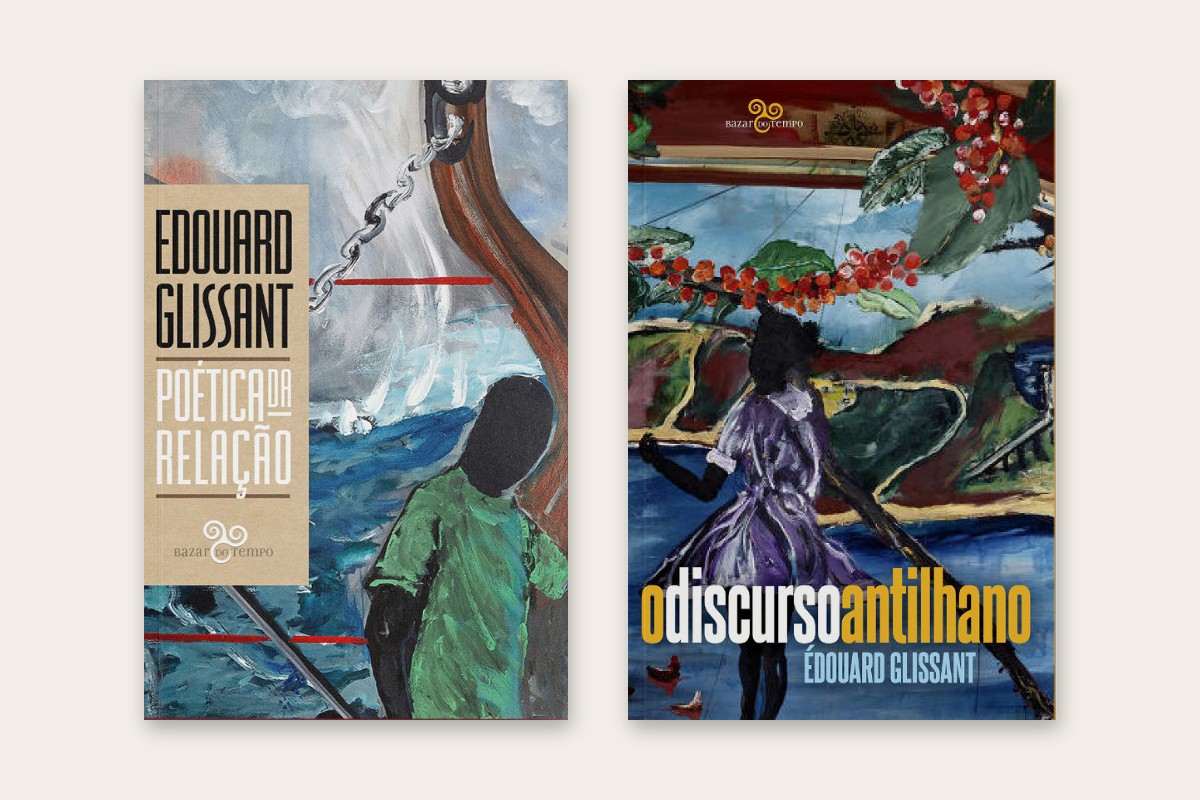
At this juncture, Glissant introduces complexity to the discussion. Born in Martinique in 1928 and a political supporter of Césaire, Glissant emerged as the most significant critic of Négritude in the subsequent generation. He did not reject Africa but questioned the pursuit of a singular origin. In contrast to Négritude’s focus on ancestral roots, he advanced the concept of Antillanité, or Caribbeanness, as a culture shaped by multiple influences. In Le Discours antillais (1981), now O discurso antilhano, he characterizes the Antilles as a site of creolization, where cultural encounters generate unpredictable outcomes.
In Poétique de la Relation (1990), Glissant differentiates between two forms of identity. Root identity is based on a foundational myth and lineage, asserts legitimacy over land, and transforms that land into a territory for potential conquest. Relation identity, by contrast, arises from the conscious and often contradictory experience of intercultural contact. It circulates rather than possesses, and regards land as a site of exchange rather than property. Glissant further introduces the right to opacity: the right not to be reduced to what another can fully comprehend or categorize.
When considered through Glissant’s framework, the two aspects of our week took on new significance. Racial democracy employs the rhetoric of mixture, yet it operates as a root narrative: it is anchored in a foundational event, the encounter of three peoples, and maintains an internal hierarchy, as exemplified by the emblem of 1957. In contrast, Glissant’s concept of creolization does not synthesize or resolve differences. Instead, it is an ongoing process with no predetermined outcome, where no single root occupies the center. This distinction clarified for students why the celebration of mixture is distinct from the dismantling of racism. By calling himself Antillean, Don Tite claims belonging to an expanded geography, the Afro-diasporic Caribbean.
For this reason, the publication of Glissant’s works in Brazilian bookstores holds significance beyond the Caribbean context. Brazil not only articulated the classic formulation of racial democracy but also constitutes, by population, the largest African diaspora in the Americas. By engaging with Glissant’s writings in Portuguese, Brazilians can recognize their place within an expanded geography of Caribbean creolized cultures, sharing a common history shaped by the sugar and the slave trade.
Works Cited
Alberto, Paulina L., and Jesse Hoffnung-Garskof. “‘Racial Democracy’ and Racial Inclusion: Hemispheric Histories.” Afro-Latin American Studies: An Introduction, edited by Alejandro de la Fuente and George Reid Andrews, Cambridge UP, 2018, pp. 264–316.
Capó García, Rafael V. “Monuments to Mestizaje and the Commemoration of Racial Democracy in Puerto Rico.” Visual Anthropology Review, vol. 39, no. 2, 2023, pp. 350–87.
Dávila, Arlene. Sponsored Identities: Cultural Politics in Puerto Rico. Temple UP, 1997.
Eltis, David, and David Richardson. Atlas of the Transatlantic Slave Trade. Yale UP, 2010.
Fernandes, Florestan. The Negro in Brazilian Society. Translated by Jacqueline D. Skiles et al., Columbia UP, 1969.
Freyre, Gilberto. The Masters and the Slaves: A Study in the Development of Brazilian Civilization. 1933. Translated by Samuel Putnam, Alfred A. Knopf, 1956.
Glissant, Édouard. O discurso antilhano. Translated by Thiago Florencio, Bazar do Tempo, 2025.
—. Poética da relação. Translated by Marcela Vieira and Eduardo Jorge de Oliveira, Bazar do Tempo, 2021.
—. Poetics of Relation. Translated by Betsy Wing, U of Michigan P, 1997.
Godreau, Isar P. Scripts of Blackness: Race, Cultural Nationalism, and U.S. Colonialism in Puerto Rico. U of Illinois P, 2015.
Kiffer, Ana. O mar entre nós: Pensar o mundo com Édouard Glissant. Bazar do Tempo, 2026.
“Las Caras Lindas (De Mi Gente Negra): An Ode to Blackness.” La Brega, season 2, episode 5, Futuro Studios / WNYC Studios, 2 Mar. 2023.
Meléndez-Badillo, Jorell. Puerto Rico: A National History. Princeton UP, 2024.
Nascimento, Abdias do. Brazil, Mixture or Massacre? Essays in the Genocide of a Black People. Translated by Elisa Larkin Nascimento, Majority Press, 1989.
Rivera, Ismael. “Las caras lindas.” Written by Catalino “Tite” Curet Alonso. Esto sí es lo mío, Tico Records, 1978.
Rodríguez Silva, Ileana M. “Abolition, Race, and the Politics of Gratitude in Late Nineteenth-Century Puerto Rico.” Hispanic American Historical Review, vol. 93, no. 4, 2013, pp. 621–57.
Tannenbaum, Frank. Slave and Citizen: The Negro in the Americas. 1946. Beacon Press, 1992.
Vasconcelos, José. The Cosmic Race / La raza cósmica. 1925. Translated by Didier T. Jaén, Johns Hopkins UP, 1997.


Leave a Reply