LAT 125, Puerto Rico: Culture and Folklore, is a course I teach at Borough of Manhattan Community College. Its syllabus unfolds as a cartography of the island’s history, culture, and political identity, moving from the colonial period into the present. Each week, literature, poetry, documentaries, journalism, and primary sources are woven together to pursue a question that lingers at every discussion: what it means to be Puerto Rican in a territory that belongs to the United States but is not part of it.
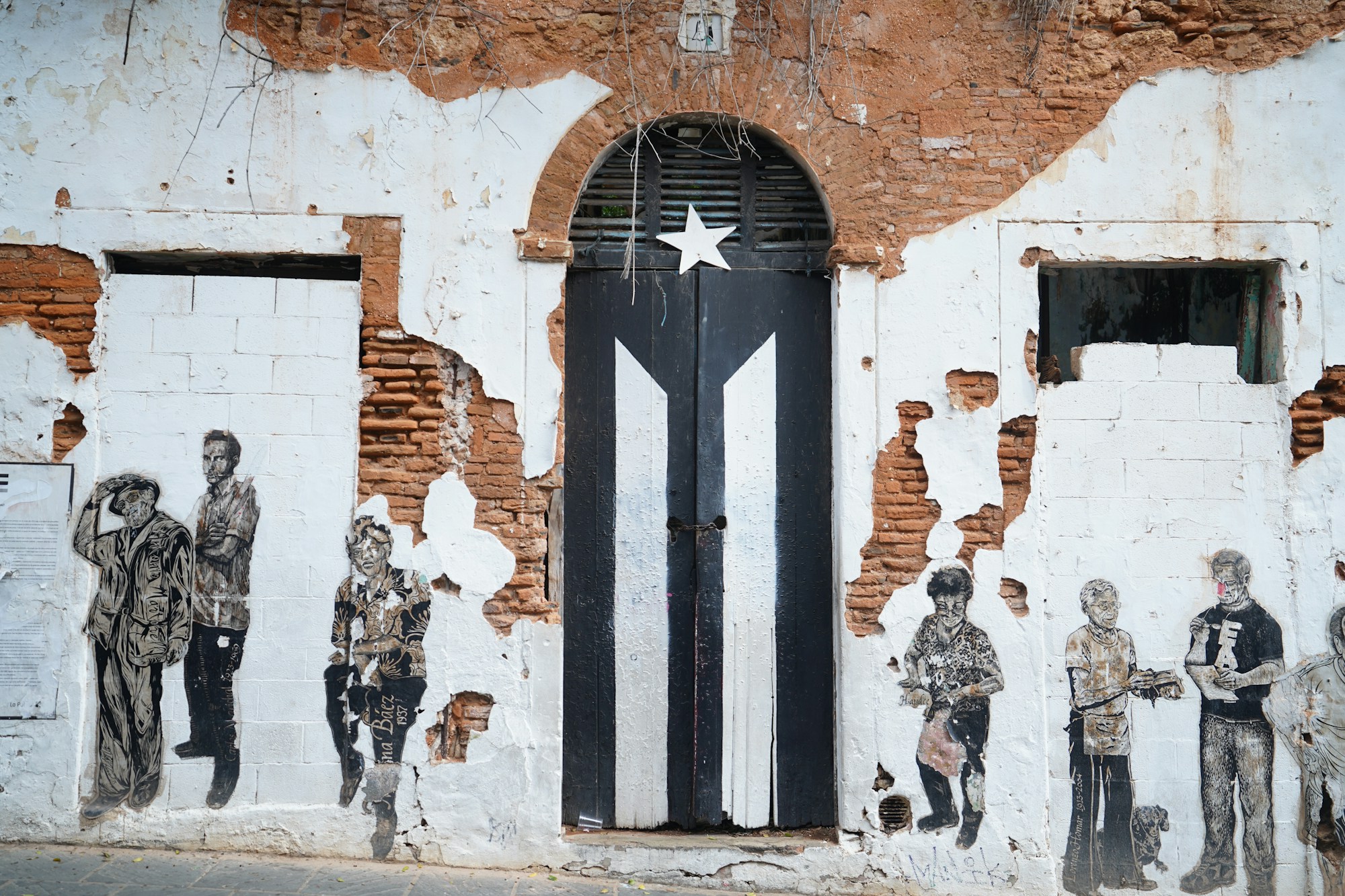
By the thirteenth week, the class turned to nationalism and independence. Students have already encountered Juan González’s Harvest of Empire (2000), which argues that the Latino presence in the United States is not a demographic accident but a political consequence: the nations most subject to U.S. military intervention, corporate extraction, and colonial rule are precisely those that have sent the largest migrations north. Puerto Rico stands as a nation annexed as a territorial possession in 1898. That week’s focus converges on three figures whose political thought forms a continuous argument against U.S. imperialism in the Caribbean: José Martí, Pedro Albizu Campos, and Julia de Burgos.
Martí and the Hemispheric Argument
The thread begins with José Martí, specifically his 1891 essay Nuestra América, written in New York while Martí organized Cuban independence and watched U.S. expansionism accelerate toward what would, seven years later, become the seizure of Cuba and Puerto Rico. The essay is the foundational counterpoint to the Monroe Doctrine of 1823, which had declared the entire Western Hemisphere a U.S. sphere of influence — officially framed as the defense of Latin American sovereignty against European interference, functioning in practice as the ideological architecture of U.S. imperial dominance and the transformation of Latin America into US strategic and commercial backyard. Where Monroe claimed the Americas for America, Martí insisted they belonged to all the peoples that European colonialism had brought into violent and generative contact.
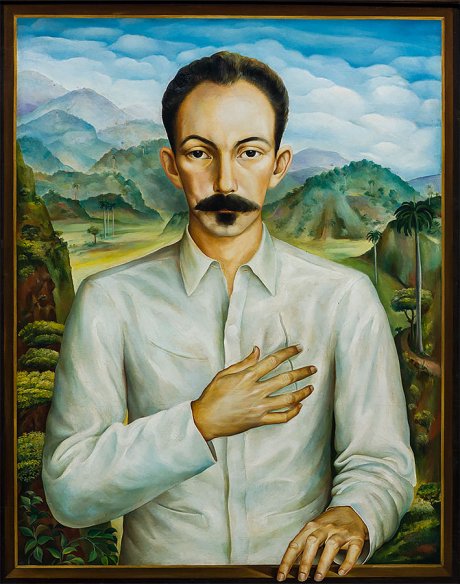
But Martí went further than a catalog of populations. In one of the essay’s most radical moves, he declared that there are no races because the divisions that colonialism had imposed to organize domination were fictions, tools of power rather than facts of nature. To govern Latin America on imported models, whether from Washington or from Paris, was therefore not only a political error but a deeper form of self-colonization: the internalization of the conqueror’s categories long after the conqueror had been formally expelled. Having lived for years inside the United States and witnessed its expansionism firsthand, Martí wrote in his final letter that he had lived inside the monster — identifying the U.S. not merely as a rival power but as the defining existential threat to Caribbean and Latin American sovereignty. When Albizu Campos and Julia de Burgos spoke two and three decades later, they were speaking from inside that same monster, and they knew it.
Albizu Campos and the Criminalization of the Word
Pedro Albizu Campos emerges as Martí’s most consequential inheritor in Puerto Rico. Trained at Harvard University, of Afro-Puerto Rican descent, Albizu refused the seductions of the U.S. legal order and devoted his life instead to the Nationalist Party. His years in federal and colonial prisons are not merely biographical detail — they are the material evidence of what the colonial state does with dissent it cannot metabolize. As president of the Nationalist Party from 1930 until his death, Albizu articulated a political theology grounded in a single unyielding premise: Puerto Rico was already a nation, sovereignty was not a status to be negotiated but a fact to be enacted, and the authority of every judge, governor, police officer, and legislator on the island was null because it emanated from the United States rather than from the Puerto Rican people.
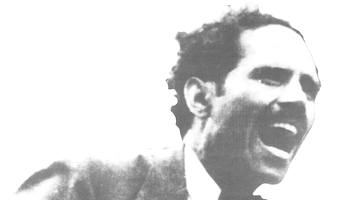
The speeches I teach in class are drawn from La Palabra Como Delito (2000), compiled by historian Ivonne Acosta—a collection of discourses for which Albizu Campos was prosecuted under Law 53 of 1948, the Ley de la Mordaza, which made pro-independence speech a felony. The title, The Word as Crime, captures the logic of the colonial state with surgical precision: the occupation of Puerto Rico required not only military and economic control but the occupation of language itself, the criminalization of the act of naming what was happening. The transcriptions, certified by Carmelo Gloró, detective-stenographer of the Insular Police, were used as prosecutorial evidence. The very documents the colonial state produced to imprison Albizu became, in Acosta’s hands, an archive of resistance.
One of the most generative discussions in class turns on why Albizu used the word yanquis rather than americanos. It is a precise act of naming that refuses a prior act of theft. Martí had insisted that “America” belonged to all the peoples of the hemisphere; to call the occupying power americanos was to concede that continental belonging by nomenclature, to accept the displacement that the Monroe Doctrine had encoded into language. Yanqui names the imperial function: the occupying power, the force whose authority derives from Washington rather than from Puerto Rico. It is the same move Irish republicans made when they named the British occupation rather than the British people—the naming of the colonial function rather than the national identity. In doing so, Albizu places Puerto Rico’s struggle within the global anticolonial tradition that Martí had theorized: the colonized asserting the right to name their own condition on their own terms.
Julia de Burgos and the Personal as Colonial
Julia de Burgos (1914–1953) extends Martí’s argument through the register the intimate, the bodily, the gendered. Born in Carolina in poverty, educated at the University of Puerto Rico on scholarship, and serving as Secretary General of the Daughters of Freedom — the women’s branch of the Nationalist Party — de Burgos brought to the anti-imperial tradition a dimension that her predecessors had left theoretically incomplete: the relationship between colonial domination and patriarchal domination as two aspects of the same structure of power, as one can see when reading texts from I Am My Own Path: Selected Writings of Julia de Burgos, edited and translated by Vanessa Pérez-Rosario — the first comprehensive bilingual, English-Spanish collection of de Burgos’s poetry, essays, and letters, published by the University of Texas Press.
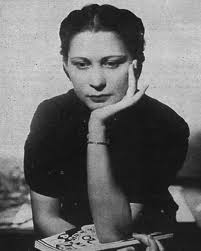
Her 1936 speech to the Frente Unido Femenino pro Convención Constituyente, delivered at the Ateneo Puertorriqueño to commemorate the Grito de Lares, makes this argument through Catholic theological language — the only idiom a women’s political assembly in 1930s Puerto Rico could use to authorize itself in public. She tells Puerto Rican women that casting a vote in colonial elections is not a civic act but a profanación: a desecration of the divine grace that constitutes their motherhood, a voluntary surrender to slavery that makes them unworthy of touching the bandera monoestrellada. The household and the homeland are made structurally equivalent — to divide one through partisan colonial politics is to divide the other — and woman, as the sacred center of both, bears a specific responsibility: her participation in the colonial system is a betrayal not only of Puerto Rico but of her own most essential nature.
Albizu Campos, speaking years later in Cabo Rojo and Santurce under the very Ley de la Mordaza that had made such speech a crime, extends this logic by shaming Puerto Rican men for tolerating the humiliation of their women and children under colonial rule — inverting the gendered equation and making masculine honor the measure of national resistance. Together, their discourses construct a nationalist framework in which sovereignty and womanhood are inseparable: the colonial elections that Washington organizes and that Muñoz Marín’s Partido Popular Democrático administers are, for both speakers, not merely politically illegitimate but morally catastrophic, because they ask a colonized people to perform their own subjection at the ballot box — and they ask women to do so in the name of the very nation whose liberation they are simultaneously being told to embody and defend.
De Burgos’s most radical work, however, complicates her own 1936 argument in ways that mark her as the tradition’s most searching critic from within. Later writings would split the speaker in two: the social Julia who radiates love, sacrifices, and conforms—the nationalist heroine the movement required—and the true Julia who belongs to no one, who refuses the social lies that respectability and patriotism have conspired to make of her. The tension between these two Julias names the colonial project as a patriarchal project.
The Transmission of Ideas
De Burgos knew Albizu Campos personally, served in his party’s women’s organization, and wrote a poem hailing him as an apostle of independence. She worked at Pueblos Hispanos in New York, where Juan Antonio Corretjer — who had been prosecuted alongside Albizu on seditious conspiracy charges in 1936 — served as director. The intellectual network was dense, intentional, and transatlantic: it reached from Martí’s New York exile in the 1880s and 1890s, through Albizu’s formation at a US university and his tours of Ireland and Latin America building anticolonial solidarity, to de Burgos’s own years in New York and Cuba writing cultural journalism that placed Puerto Rico’s struggle within the continental framework Martí had theorized. What each inherited from the other was the insistence that the right to name your own condition — your nation, your flag, your body — is a fundamental act of self-determination.


Leave a Reply